new

Get trending papers in your email inbox!

Subscribe

Daily Papers

byAK and the research community

Jun 5

LatticeWorld: A Multimodal Large Language Model-Empowered Framework for Interactive Complex World Generation

Recent research has been increasingly focusing on developing 3D world models that simulate complex real-world scenarios. World models have found broad applications across various domains, including embodied AI, autonomous driving, entertainment, etc. A more realistic simulation with accurate physics will effectively narrow the sim-to-real gap and allow us to gather rich information about the real world conveniently. While traditional manual modeling has enabled the creation of virtual 3D scenes, modern approaches have leveraged advanced machine learning algorithms for 3D world generation, with most recent advances focusing on generative methods that can create virtual worlds based on user instructions. This work explores such a research direction by proposing LatticeWorld, a simple yet effective 3D world generation framework that streamlines the industrial production pipeline of 3D environments. LatticeWorld leverages lightweight LLMs (LLaMA-2-7B) alongside the industry-grade rendering engine (e.g., Unreal Engine 5) to generate a dynamic environment. Our proposed framework accepts textual descriptions and visual instructions as multimodal inputs and creates large-scale 3D interactive worlds with dynamic agents, featuring competitive multi-agent interaction, high-fidelity physics simulation, and real-time rendering. We conduct comprehensive experiments to evaluate LatticeWorld, showing that it achieves superior accuracy in scene layout generation and visual fidelity. Moreover, LatticeWorld achieves over a 90times increase in industrial production efficiency while maintaining high creative quality compared with traditional manual production methods. Our demo video is available at https://youtu.be/8VWZXpERR18

  • 10 authors
·
Sep 5, 2025 3

Planning-Guided Diffusion Policy Learning for Generalizable Contact-Rich Bimanual Manipulation

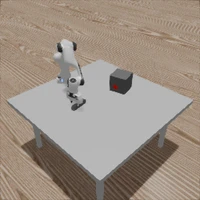
Contact-rich bimanual manipulation involves precise coordination of two arms to change object states through strategically selected contacts and motions. Due to the inherent complexity of these tasks, acquiring sufficient demonstration data and training policies that generalize to unseen scenarios remain a largely unresolved challenge. Building on recent advances in planning through contacts, we introduce Generalizable Planning-Guided Diffusion Policy Learning (GLIDE), an approach that effectively learns to solve contact-rich bimanual manipulation tasks by leveraging model-based motion planners to generate demonstration data in high-fidelity physics simulation. Through efficient planning in randomized environments, our approach generates large-scale and high-quality synthetic motion trajectories for tasks involving diverse objects and transformations. We then train a task-conditioned diffusion policy via behavior cloning using these demonstrations. To tackle the sim-to-real gap, we propose a set of essential design options in feature extraction, task representation, action prediction, and data augmentation that enable learning robust prediction of smooth action sequences and generalization to unseen scenarios. Through experiments in both simulation and the real world, we demonstrate that our approach can enable a bimanual robotic system to effectively manipulate objects of diverse geometries, dimensions, and physical properties. Website: https://glide-manip.github.io/

  • 6 authors
·
Dec 3, 2024

High-Fidelity Simulated Data Generation for Real-World Zero-Shot Robotic Manipulation Learning with Gaussian Splatting

The scalability of robotic learning is fundamentally bottlenecked by the significant cost and labor of real-world data collection. While simulated data offers a scalable alternative, it often fails to generalize to the real world due to significant gaps in visual appearance, physical properties, and object interactions. To address this, we propose RoboSimGS, a novel Real2Sim2Real framework that converts multi-view real-world images into scalable, high-fidelity, and physically interactive simulation environments for robotic manipulation. Our approach reconstructs scenes using a hybrid representation: 3D Gaussian Splatting (3DGS) captures the photorealistic appearance of the environment, while mesh primitives for interactive objects ensure accurate physics simulation. Crucially, we pioneer the use of a Multi-modal Large Language Model (MLLM) to automate the creation of physically plausible, articulated assets. The MLLM analyzes visual data to infer not only physical properties (e.g., density, stiffness) but also complex kinematic structures (e.g., hinges, sliding rails) of objects. We demonstrate that policies trained entirely on data generated by RoboSimGS achieve successful zero-shot sim-to-real transfer across a diverse set of real-world manipulation tasks. Furthermore, data from RoboSimGS significantly enhances the performance and generalization capabilities of SOTA methods. Our results validate RoboSimGS as a powerful and scalable solution for bridging the sim-to-real gap.

Alibaba-DAMO-Academy DAMO Academy
·
Oct 12, 2025 2

PICA: Physics-Integrated Clothed Avatar

We introduce PICA, a novel representation for high-fidelity animatable clothed human avatars with physics-accurate dynamics, even for loose clothing. Previous neural rendering-based representations of animatable clothed humans typically employ a single model to represent both the clothing and the underlying body. While efficient, these approaches often fail to accurately represent complex garment dynamics, leading to incorrect deformations and noticeable rendering artifacts, especially for sliding or loose garments. Furthermore, previous works represent garment dynamics as pose-dependent deformations and facilitate novel pose animations in a data-driven manner. This often results in outcomes that do not faithfully represent the mechanics of motion and are prone to generating artifacts in out-of-distribution poses. To address these issues, we adopt two individual 3D Gaussian Splatting (3DGS) models with different deformation characteristics, modeling the human body and clothing separately. This distinction allows for better handling of their respective motion characteristics. With this representation, we integrate a graph neural network (GNN)-based clothed body physics simulation module to ensure an accurate representation of clothing dynamics. Our method, through its carefully designed features, achieves high-fidelity rendering of clothed human bodies in complex and novel driving poses, significantly outperforming previous methods under the same settings.

  • 5 authors
·
Jul 7, 2024

UrbanVerse: Scaling Urban Simulation by Watching City-Tour Videos

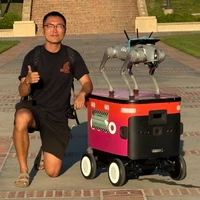
Urban embodied AI agents, ranging from delivery robots to quadrupeds, are increasingly populating our cities, navigating chaotic streets to provide last-mile connectivity. Training such agents requires diverse, high-fidelity urban environments to scale, yet existing human-crafted or procedurally generated simulation scenes either lack scalability or fail to capture real-world complexity. We introduce UrbanVerse, a data-driven real-to-sim system that converts crowd-sourced city-tour videos into physics-aware, interactive simulation scenes. UrbanVerse consists of: (i) UrbanVerse-100K, a repository of 100k+ annotated urban 3D assets with semantic and physical attributes, and (ii) UrbanVerse-Gen, an automatic pipeline that extracts scene layouts from video and instantiates metric-scale 3D simulations using retrieved assets. Running in IsaacSim, UrbanVerse offers 160 high-quality constructed scenes from 24 countries, along with a curated benchmark of 10 artist-designed test scenes. Experiments show that UrbanVerse scenes preserve real-world semantics and layouts, achieving human-evaluated realism comparable to manually crafted scenes. In urban navigation, policies trained in UrbanVerse exhibit scaling power laws and strong generalization, improving success by +6.3% in simulation and +30.1% in zero-shot sim-to-real transfer comparing to prior methods, accomplishing a 300 m real-world mission with only two interventions.

  • 5 authors
·
Oct 16, 2025 1

AB-UPT: Scaling Neural CFD Surrogates for High-Fidelity Automotive Aerodynamics Simulations via Anchored-Branched Universal Physics Transformers

Recent advances in neural surrogate modeling offer the potential for transformative innovations in applications such as automotive aerodynamics. Yet, industrial-scale problems often involve volumetric meshes with cell counts reaching the 100 millions, presenting major scalability challenges. Complex geometries further complicate modeling through intricate surface-volume interactions, while quantities such as vorticity are highly nonlinear and must satisfy strict divergence-free constraints. To address these requirements, we introduce AB-UPT as a novel modeling scheme for building neural surrogates for CFD simulations. AB-UPT is designed to: (i) decouple geometry encoding and prediction tasks via multi-branch operators; (ii) enable scalability to high-resolution outputs via neural simulation in a low-dimensional latent space, coupled with anchored neural field decoders to predict high-fidelity outputs; (iii) enforce physics consistency by a novel divergence-free formulation. We show that AB-UPT yields state-of-the-art predictive accuracy of surface and volume fields on automotive CFD simulations ranging from 33 thousand up to 150 million mesh cells. Furthermore, our anchored neural field architecture enables the enforcement of hard physical constraints on the physics predictions without degradation in performance, exemplified by modeling divergence-free vorticity fields. Notably, the proposed models can be trained on a single GPU in less than a day and predict industry-standard surface and volume fields within seconds. Additionally, we show that the flexible design of our method enables neural simulation from a CAD geometry alone, omitting the need for costly CFD meshing procedures.

  • 7 authors
·
Feb 13, 2025

FlightForge: Advancing UAV Research with Procedural Generation of High-Fidelity Simulation and Integrated Autonomy

Robotic simulators play a crucial role in the development and testing of autonomous systems, particularly in the realm of Uncrewed Aerial Vehicles (UAV). However, existing simulators often lack high-level autonomy, hindering their immediate applicability to complex tasks such as autonomous navigation in unknown environments. This limitation stems from the challenge of integrating realistic physics, photorealistic rendering, and diverse sensor modalities into a single simulation environment. At the same time, the existing photorealistic UAV simulators use mostly hand-crafted environments with limited environment sizes, which prevents the testing of long-range missions. This restricts the usage of existing simulators to only low-level tasks such as control and collision avoidance. To this end, we propose the novel FlightForge UAV open-source simulator. FlightForge offers advanced rendering capabilities, diverse control modalities, and, foremost, procedural generation of environments. Moreover, the simulator is already integrated with a fully autonomous UAV system capable of long-range flights in cluttered unknown environments. The key innovation lies in novel procedural environment generation and seamless integration of high-level autonomy into the simulation environment. Experimental results demonstrate superior sensor rendering capability compared to existing simulators, and also the ability of autonomous navigation in almost infinite environments.

  • 7 authors
·
Feb 7, 2025

ClimSim: An open large-scale dataset for training high-resolution physics emulators in hybrid multi-scale climate simulators

Modern climate projections lack adequate spatial and temporal resolution due to computational constraints. A consequence is inaccurate and imprecise predictions of critical processes such as storms. Hybrid methods that combine physics with machine learning (ML) have introduced a new generation of higher fidelity climate simulators that can sidestep Moore's Law by outsourcing compute-hungry, short, high-resolution simulations to ML emulators. However, this hybrid ML-physics simulation approach requires domain-specific treatment and has been inaccessible to ML experts because of lack of training data and relevant, easy-to-use workflows. We present ClimSim, the largest-ever dataset designed for hybrid ML-physics research. It comprises multi-scale climate simulations, developed by a consortium of climate scientists and ML researchers. It consists of 5.7 billion pairs of multivariate input and output vectors that isolate the influence of locally-nested, high-resolution, high-fidelity physics on a host climate simulator's macro-scale physical state. The dataset is global in coverage, spans multiple years at high sampling frequency, and is designed such that resulting emulators are compatible with downstream coupling into operational climate simulators. We implement a range of deterministic and stochastic regression baselines to highlight the ML challenges and their scoring. The data (https://huggingface.co/datasets/LEAP/ClimSim_high-res, https://huggingface.co/datasets/LEAP/ClimSim_low-res, and https://huggingface.co/datasets/LEAP/ClimSim_low-res_aqua-planet) and code (https://leap-stc.github.io/ClimSim) are released openly to support the development of hybrid ML-physics and high-fidelity climate simulations for the benefit of science and society.

  • 56 authors
·
Jun 14, 2023

DIFFTACTILE: A Physics-based Differentiable Tactile Simulator for Contact-rich Robotic Manipulation

We introduce DIFFTACTILE, a physics-based differentiable tactile simulation system designed to enhance robotic manipulation with dense and physically accurate tactile feedback. In contrast to prior tactile simulators which primarily focus on manipulating rigid bodies and often rely on simplified approximations to model stress and deformations of materials in contact, DIFFTACTILE emphasizes physics-based contact modeling with high fidelity, supporting simulations of diverse contact modes and interactions with objects possessing a wide range of material properties. Our system incorporates several key components, including a Finite Element Method (FEM)-based soft body model for simulating the sensing elastomer, a multi-material simulator for modeling diverse object types (such as elastic, elastoplastic, cables) under manipulation, a penalty-based contact model for handling contact dynamics. The differentiable nature of our system facilitates gradient-based optimization for both 1) refining physical properties in simulation using real-world data, hence narrowing the sim-to-real gap and 2) efficient learning of tactile-assisted grasping and contact-rich manipulation skills. Additionally, we introduce a method to infer the optical response of our tactile sensor to contact using an efficient pixel-based neural module. We anticipate that DIFFTACTILE will serve as a useful platform for studying contact-rich manipulations, leveraging the benefits of dense tactile feedback and differentiable physics. Code and supplementary materials are available at the project website https://difftactile.github.io/.

  • 7 authors
·
Mar 13, 2024

GPU Acceleration and Portability of the TRIMEG Code for Gyrokinetic Plasma Simulations using OpenMP

The field of plasma physics heavily relies on simulations to model various phenomena, such as instabilities, turbulence, and nonlinear behaviors that would otherwise be difficult to study from a purely theoretical approach. Simulations are fundamental in accurately setting up experiments, which can be extremely costly and complex. As high-fidelity tools, gyrokinetic simulations play a crucial role in discovering new physics, interpreting experimental results, and improving the design of next-generation devices. However, their high computational costs necessitate the use of acceleration platforms to reduce execution time. This work revolves around the TRIangular MEsh based Gyrokinetic (TRIMEG) code, which performs high-accuracy particle-in-cell plasma simulations in tokamak geometries, leveraging a novel finite element approach. The rise of graphical processing units (GPUs) constitutes an occasion to satisfy such computational needs, by offloading the most expensive portion of the code to the accelerators. The chosen approach features GPU offloading with the OpenMP API, which grants portability of the code to different architectures, namely AMD and NVIDIA. The particle pushing as well as the grid-to-particle operations have been ported to GPU platforms. Compiler limitations had to be overcome, and portions of the code were restructured to be suitable for GPU acceleration. Kernel performance was evaluated by carrying out GPU grid size exploration, as well as scalability studies. In addition, the efficiency of hybrid MPI-OpenMP offloading parallelization was assessed. The speedup of the GPU implementation was calculated by comparing it with the pure CPU version using different rationales. The Ion Temperature Gradient (ITG) mode was simulated using the GPU-accelerated version, and its correctness was verified in terms of the energy growth rate and the two-dimensional mode structures.

  • 1 authors
·
Jan 17 1

Towards a Physics Foundation Model

Foundation models have revolutionized natural language processing through a ``train once, deploy anywhere'' paradigm, where a single pre-trained model adapts to countless downstream tasks without retraining. Access to a Physics Foundation Model (PFM) would be transformative -- democratizing access to high-fidelity simulations, accelerating scientific discovery, and eliminating the need for specialized solver development. Yet current physics-aware machine learning approaches remain fundamentally limited to single, narrow domains and require retraining for each new system. We present the General Physics Transformer (GPhyT), trained on 1.8 TB of diverse simulation data, that demonstrates foundation model capabilities are achievable for physics. Our key insight is that transformers can learn to infer governing dynamics from context, enabling a single model to simulate fluid-solid interactions, shock waves, thermal convection, and multi-phase dynamics without being told the underlying equations. GPhyT achieves three critical breakthroughs: (1) superior performance across multiple physics domains, outperforming specialized architectures by up to 29x, (2) zero-shot generalization to entirely unseen physical systems through in-context learning, and (3) stable long-term predictions through 50-timestep rollouts. By establishing that a single model can learn generalizable physical principles from data alone, this work opens the path toward a universal PFM that could transform computational science and engineering.

  • 3 authors
·
Sep 17, 2025 2

BrickSim: A Physics-Based Simulator for Manipulating Interlocking Brick Assemblies

Interlocking brick assemblies provide a standardized yet challenging testbed for contact-rich and long-horizon robotic manipulation, but existing rigid-body simulators do not faithfully capture snap-fit mechanics. We present BrickSim, the first real-time physics-based simulator for interlocking brick assemblies. BrickSim introduces a compact force-based mechanics model for snap-fit connections and solves the resulting internal force distribution using a structured convex quadratic program. Combined with a hybrid architecture that delegates rigid-body dynamics to the underlying physics engine while handling snap-fit mechanics separately, BrickSim enables real-time, high-fidelity simulation of assembly, disassembly, and structural collapse. On 150 real-world assemblies, BrickSim achieves 100% accuracy in static stability prediction with an average solve time of 5 ms. In dynamic drop tests, it also faithfully reproduces real-world structural collapse, precisely mirroring both the occurrence of breakage and the specific breakage locations. Built on Isaac Sim, BrickSim further supports seamless integration with a wide variety of robots and existing pipelines. We demonstrate robotic construction of brick assemblies using BrickSim, highlighting its potential as a foundation for research in dexterous, long-horizon robotic manipulation. BrickSim is open-source, and the code is available at https://github.com/intelligent-control-lab/BrickSim.

WorldBench: Disambiguating Physics for Diagnostic Evaluation of World Models

Recent advances in generative foundational models, often termed "world models," have propelled interest in applying them to critical tasks like robotic planning and autonomous system training. For reliable deployment, these models must exhibit high physical fidelity, accurately simulating real-world dynamics. Existing physics-based video benchmarks, however, suffer from entanglement, where a single test simultaneously evaluates multiple physical laws and concepts, fundamentally limiting their diagnostic capability. We introduce WorldBench, a novel video-based benchmark specifically designed for concept-specific, disentangled evaluation, allowing us to rigorously isolate and assess understanding of a single physical concept or law at a time. To make WorldBench comprehensive, we design benchmarks at two different levels: 1) an evaluation of intuitive physical understanding with concepts such as object permanence or scale/perspective, and 2) an evaluation of low-level physical constants and material properties such as friction coefficients or fluid viscosity. When SOTA video-based world models are evaluated on WorldBench, we find specific patterns of failure in particular physics concepts, with all tested models lacking the physical consistency required to generate reliable real-world interactions. Through its concept-specific evaluation, WorldBench offers a more nuanced and scalable framework for rigorously evaluating the physical reasoning capabilities of video generation and world models, paving the way for more robust and generalizable world-model-driven learning.

  • 10 authors
·
Jan 29 2

GS-Playground: A High-Throughput Photorealistic Simulator for Vision-Informed Robot Learning

Embodied AI research is undergoing a shift toward vision-centric perceptual paradigms. While massively parallel simulators have catalyzed breakthroughs in proprioception-based locomotion, their potential remains largely untapped for vision-informed tasks due to the prohibitive computational overhead of large-scale photorealistic rendering. Furthermore, the creation of simulation-ready 3D assets heavily relies on labor-intensive manual modeling, while the significant sim-to-real physical gap hinders the transfer of contact-rich manipulation policies. To address these bottlenecks, we propose GS-Playground, a multi-modal simulation framework designed to accelerate end-to-end perceptual learning. We develop a novel high-performance parallel physics engine, specifically designed to integrate with a batch 3D Gaussian Splatting (3DGS) rendering pipeline to ensure high-fidelity synchronization. Our system achieves a breakthrough throughput of 10^4 FPS at 640x480 resolution, significantly lowering the barrier for large-scale visual RL. Additionally, we introduce an automated Real2Sim workflow that reconstructs photorealistic, physically consistent, and memory-efficient environments, streamlining the generation of complex simulation-ready scenes. Extensive experiments on locomotion, navigation, and manipulation demonstrate that GS-Playground effectively bridges the perceptual and physical gaps across diverse embodied tasks. Project homepage: https://gsplayground.github.io.

  • 42 authors
·
Apr 27

AI CFD Scientist: Toward Open-Ended Computational Fluid Dynamics Discovery with Physics-Aware AI Agents

Recent LLM-based agents have closed substantial portions of the scientific discovery loop in software-only machine-learning research, in chemistry, and in biology. Extending the same loop to high-fidelity physical simulators is harder, because solver completion does not imply physical validity and many failure modes appear only in field-level imagery rather than in solver logs. We present AI CFD Scientist, an open-source AI scientist for computational fluid dynamics (CFD) that, to our knowledge, is the first to span literature-grounded ideation, validated execution, vision-based physics verification, source-code modification, and figure-grounded writing within a single inspectable workflow. Three coupled pathways cover parameter sweeps within a fixed solver, case-local C++ library compilation for new physical models, and open-ended hypothesis search against a reference comparator, all running on OpenFOAM through Foam-Agent. At the center of the framework is a vision-language physics-verification gate that inspects rendered flow fields before any result is accepted, rerun, or written into a manuscript. On five tasks under a shared GPT-5.5 backbone, AI CFD Scientist autonomously discovers a Spalart-Allmaras runtime correction that reduces lower-wall Cf RMSE against DNS by 7.89% on the periodic hill at Reh=5600; under matched LLM cost, two strong general AI-scientist baselines (ARIS, DeepScientist) execute partial CFD workflows but lack the domain-specific validity gates needed to convert runs into defensible scientific claims; and a controlled planted-failure ablation shows that the vision-language gate detects 14 of 16 silent failures missed by solver-level checks. Code, prompts, and run artifacts are released at https://github.com/csml-rpi/cfd-scientist.

Uncertainty Quantification for Multi-fidelity Simulations

The work focuses on gathering high-fidelity and low-fidelity numerical simulations data using Nektar++ (Solver based on Applied Mathematics) and XFOIL respectively. The utilization of the higher polynomial distribution in calculating the Coefficient of lift and drag has demonstrated superior accuracy and precision. Further, Co-kriging Data fusion and Adaptive sampling technique has been used to obtain the precise data predictions for the lift and drag within the confined domain without conducting the costly simulations on HPC clusters. This creates a methodology to quantifying uncertainty in computational fluid dynamics by minimizing the required number of samples. To minimize the reliability on high-fidelity numerical simulations in Uncertainty Quantification, a multi-fidelity strategy has been adopted. The effectiveness of the multi-fidelity deep neural network model has been validated through the approximation of benchmark functions across 1-, 32-, and 100-dimensional, encompassing both linear and nonlinear correlations. The surrogate modelling results showed that multi-fidelity deep neural network model has shown excellent approximation capabilities for the test functions and multi-fidelity deep neural network method has outperformed Co-kriging in effectiveness. In addition to that, multi-fidelity deep neural network model is utilized for the simulation of aleatory uncertainty propagation in 1-, 32-, and 100 dimensional function test, considering both uniform and Gaussian distributions for input uncertainties. The results have shown that multi-fidelity deep neural network model has efficiently predicted the probability density distributions of quantities of interest as well as the statistical moments with precision and accuracy. The Co-Kriging model has exhibited limitations when addressing 32-Dimension problems due to the limitation of memory capacity for storage and manipulation.

  • 1 authors
·
Mar 11, 2025

"PhyWorldBench": A Comprehensive Evaluation of Physical Realism in Text-to-Video Models

Video generation models have achieved remarkable progress in creating high-quality, photorealistic content. However, their ability to accurately simulate physical phenomena remains a critical and unresolved challenge. This paper presents PhyWorldBench, a comprehensive benchmark designed to evaluate video generation models based on their adherence to the laws of physics. The benchmark covers multiple levels of physical phenomena, ranging from fundamental principles like object motion and energy conservation to more complex scenarios involving rigid body interactions and human or animal motion. Additionally, we introduce a novel ""Anti-Physics"" category, where prompts intentionally violate real-world physics, enabling the assessment of whether models can follow such instructions while maintaining logical consistency. Besides large-scale human evaluation, we also design a simple yet effective method that could utilize current MLLM to evaluate the physics realism in a zero-shot fashion. We evaluate 12 state-of-the-art text-to-video generation models, including five open-source and five proprietary models, with a detailed comparison and analysis. we identify pivotal challenges models face in adhering to real-world physics. Through systematic testing of their outputs across 1,050 curated prompts-spanning fundamental, composite, and anti-physics scenarios-we identify pivotal challenges these models face in adhering to real-world physics. We then rigorously examine their performance on diverse physical phenomena with varying prompt types, deriving targeted recommendations for crafting prompts that enhance fidelity to physical principles.

  • 11 authors
·
Jul 17, 2025 1

PhysGM: Large Physical Gaussian Model for Feed-Forward 4D Synthesis

Despite advances in physics-based 3D motion synthesis, current methods face key limitations: reliance on pre-reconstructed 3D Gaussian Splatting (3DGS) built from dense multi-view images with time-consuming per-scene optimization; physics integration via either inflexible, hand-specified attributes or unstable, optimization-heavy guidance from video models using Score Distillation Sampling (SDS); and naive concatenation of prebuilt 3DGS with physics modules, which ignores physical information embedded in appearance and yields suboptimal performance. To address these issues, we propose PhysGM, a feed-forward framework that jointly predicts 3D Gaussian representation and physical properties from a single image, enabling immediate simulation and high-fidelity 4D rendering. Unlike slow appearance-agnostic optimization methods, we first pre-train a physics-aware reconstruction model that directly infers both Gaussian and physical parameters. We further refine the model with Direct Preference Optimization (DPO), aligning simulations with the physically plausible reference videos and avoiding the high-cost SDS optimization. To address the absence of a supporting dataset for this task, we propose PhysAssets, a dataset of 50K+ 3D assets annotated with physical properties and corresponding reference videos. Experiments show that PhysGM produces high-fidelity 4D simulations from a single image in one minute, achieving a significant speedup over prior work while delivering realistic renderings.Our project page is at:https://hihixiaolv.github.io/PhysGM.github.io/

  • 8 authors
·
Aug 19, 2025

Enhancing Physical Plausibility in Video Generation by Reasoning the Implausibility

Diffusion models can generate realistic videos, but existing methods rely on implicitly learning physical reasoning from large-scale text-video datasets, which is costly, difficult to scale, and still prone to producing implausible motions that violate fundamental physical laws. We introduce a training-free framework that improves physical plausibility at inference time by explicitly reasoning about implausibility and guiding the generation away from it. Specifically, we employ a lightweight physics-aware reasoning pipeline to construct counterfactual prompts that deliberately encode physics-violating behaviors. Then, we propose a novel Synchronized Decoupled Guidance (SDG) strategy, which leverages these prompts through synchronized directional normalization to counteract lagged suppression and trajectory-decoupled denoising to mitigate cumulative trajectory bias, ensuring that implausible content is suppressed immediately and consistently throughout denoising. Experiments across different physical domains show that our approach substantially enhances physical fidelity while maintaining photorealism, despite requiring no additional training. Ablation studies confirm the complementary effectiveness of both the physics-aware reasoning component and SDG. In particular, the aforementioned two designs of SDG are also individually validated to contribute critically to the suppression of implausible content and the overall gains in physical plausibility. This establishes a new and plug-and-play physics-aware paradigm for video generation.

  • 5 authors
·
Sep 29, 2025

PhysGaia: A Physics-Aware Benchmark with Multi-Body Interactions for Dynamic Novel View Synthesis

We introduce PhysGaia, a novel physics-aware benchmark for Dynamic Novel View Synthesis (DyNVS) that encompasses both structured objects and unstructured physical phenomena. While existing datasets primarily focus on photorealistic appearance, PhysGaia is specifically designed to support physics-consistent dynamic reconstruction. Our benchmark features complex scenarios with rich multi-body interactions, where objects realistically collide and exchange forces. Furthermore, it incorporates a diverse range of materials, including liquid, gas, textile, and rheological substance, moving beyond the rigid-body assumptions prevalent in prior work. To ensure physical fidelity, all scenes in PhysGaia are generated using material-specific physics solvers that strictly adhere to fundamental physical laws. We provide comprehensive ground-truth information, including 3D particle trajectories and physical parameters (e.g., viscosity), enabling the quantitative evaluation of physical modeling. To facilitate research adoption, we also provide integration pipelines for recent 4D Gaussian Splatting models along with our dataset and their results. By addressing the critical shortage of physics-aware benchmarks, PhysGaia can significantly advance research in dynamic view synthesis, physics-based scene understanding, and the integration of deep learning with physical simulation, ultimately enabling more faithful reconstruction and interpretation of complex dynamic scenes.

  • 5 authors
·
Apr 5

PhysiX: A Foundation Model for Physics Simulations

Foundation models have achieved remarkable success across video, image, and language domains. By scaling up the number of parameters and training datasets, these models acquire generalizable world knowledge and often surpass task-specific approaches. However, such progress has yet to extend to the domain of physics simulation. A primary bottleneck is data scarcity: while millions of images, videos, and textual resources are readily available on the internet, the largest physics simulation datasets contain only tens of thousands of samples. This data limitation hinders the use of large models, as overfitting becomes a major concern. As a result, physics applications typically rely on small models, which struggle with long-range prediction due to limited context understanding. Additionally, unlike images, videos, or text-which typically exhibit fixed granularity-physics datasets often vary drastically in scale, amplifying the challenges of scaling up multitask training. We introduce PhysiX, the first large-scale foundation model for physics simulation. PhysiX is a 4.5B parameter autoregressive generative model. It uses a discrete tokenizer to encode physical processes at different scales into a sequence of discrete tokens, and employs an autoregressive next-token prediction objective to model such processes in the token space. To mitigate the rounding error in the discretization process, PhysiX incorporates a specialized refinement module. Through extensive experiments, we show that PhysiX effectively addresses the data bottleneck, outperforming task-specific baselines under comparable settings as well as the previous absolute state-of-the-art approaches on The Well benchmark. Our results indicate that knowledge learned from natural videos can be successfully transferred to physics simulation, and that joint training across diverse simulation tasks enables synergistic learning.

  • 4 authors
·
Jun 21, 2025

Force Prompting: Video Generation Models Can Learn and Generalize Physics-based Control Signals

Recent advances in video generation models have sparked interest in world models capable of simulating realistic environments. While navigation has been well-explored, physically meaningful interactions that mimic real-world forces remain largely understudied. In this work, we investigate using physical forces as a control signal for video generation and propose force prompts which enable users to interact with images through both localized point forces, such as poking a plant, and global wind force fields, such as wind blowing on fabric. We demonstrate that these force prompts can enable videos to respond realistically to physical control signals by leveraging the visual and motion prior in the original pretrained model, without using any 3D asset or physics simulator at inference. The primary challenge of force prompting is the difficulty in obtaining high quality paired force-video training data, both in the real world due to the difficulty of obtaining force signals, and in synthetic data due to limitations in the visual quality and domain diversity of physics simulators. Our key finding is that video generation models can generalize remarkably well when adapted to follow physical force conditioning from videos synthesized by Blender, even with limited demonstrations of few objects. Our method can generate videos which simulate forces across diverse geometries, settings, and materials. We also try to understand the source of this generalization and perform ablations that reveal two key elements: visual diversity and the use of specific text keywords during training. Our approach is trained on only around 15k training examples for a single day on four A100 GPUs, and outperforms existing methods on force adherence and physics realism, bringing world models closer to real-world physics interactions. We release all datasets, code, weights, and interactive video demos at our project page.

  • 7 authors
·
May 25, 2025 2

ComFree-Sim: A GPU-Parallelized Analytical Contact Physics Engine for Scalable Contact-Rich Robotics Simulation and Control

Physics simulation for contact-rich robotics is often bottlenecked by contact resolution: mainstream engines enforce non-penetration and Coulomb friction via complementarity constraints or constrained optimization, requiring per-step iterative solves whose cost grows superlinearly with contact density. We present ComFree-Sim, a GPU-parallelized analytical contact physics engine built on complementarity-free contact modeling. ComFree-Sim computes contact impulses in closed form via an impedance-style prediction--correction update in the dual cone of Coulomb friction. Contact computation decouples across contact pairs and becomes separable across cone facets, mapping naturally to GPU kernels and yielding near-linear runtime scaling with the number of contacts. We further extend the formulation to a unified 6D contact model capturing tangential, torsional, and rolling friction, and introduce a practical dual-cone impedance heuristic. ComFree-Sim is implemented in Warp and exposed through a MuJoCo-compatible interface as a drop-in backend alternative to MuJoCo Warp (MJWarp). Experiments benchmark penetration, friction behaviors, stability, and simulation runtime scaling against MJWarp, demonstrating near-linear scaling and 2--3 times higher throughput in dense contact scenes with comparable physical fidelity. We deploy ComFree-Sim in real-time MPC for in-hand dexterous manipulation on a real-world multi-fingered LEAP hand and in dynamics-aware motion retargeting, demonstrating that low-latency simulation yields higher closed-loop success rates and enables practical high-frequency control in contact-rich tasks.

  • 4 authors
·
Mar 13

Physics-informed Reduced Order Modeling of Time-dependent PDEs via Differentiable Solvers

Reduced-order modeling (ROM) of time-dependent and parameterized differential equations aims to accelerate the simulation of complex high-dimensional systems by learning a compact latent manifold representation that captures the characteristics of the solution fields and their time-dependent dynamics. Although high-fidelity numerical solvers generate the training datasets, they have thus far been excluded from the training process, causing the learned latent dynamics to drift away from the discretized governing physics. This mismatch often limits generalization and forecasting capabilities. In this work, we propose Physics-informed ROM (Φ-ROM) by incorporating differentiable PDE solvers into the training procedure. Specifically, the latent space dynamics and its dependence on PDE parameters are shaped directly by the governing physics encoded in the solver, ensuring a strong correspondence between the full and reduced systems. Our model outperforms state-of-the-art data-driven ROMs and other physics-informed strategies by accurately generalizing to new dynamics arising from unseen parameters, enabling long-term forecasting beyond the training horizon, maintaining continuity in both time and space, and reducing the data cost. Furthermore, Φ-ROM learns to recover and forecast the solution fields even when trained or evaluated with sparse and irregular observations of the fields, providing a flexible framework for field reconstruction and data assimilation. We demonstrate the framework's robustness across various PDE solvers and highlight its broad applicability by providing an open-source JAX implementation that is readily extensible to other PDE systems and differentiable solvers, available at https://phi-rom.github.io.

  • 4 authors
·
May 20, 2025

An Efficient Graph-Transformer Operator for Learning Physical Dynamics with Manifolds Embedding

Accurate and efficient physical simulations are essential in science and engineering, yet traditional numerical solvers face significant challenges in computational cost when handling simulations across dynamic scenarios involving complex geometries, varying boundary/initial conditions, and diverse physical parameters. While deep learning offers promising alternatives, existing methods often struggle with flexibility and generalization, particularly on unstructured meshes, which significantly limits their practical applicability. To address these challenges, we propose PhysGTO, an efficient Graph-Transformer Operator for learning physical dynamics through explicit manifold embeddings in both physical and latent spaces. In the physical space, the proposed Unified Graph Embedding module aligns node-level conditions and constructs sparse yet structure-preserving graph connectivity to process heterogeneous inputs. In the latent space, PhysGTO integrates a lightweight flux-oriented message-passing scheme with projection-inspired attention to capture local and global dependencies, facilitating multilevel interactions among complex physical correlations. This design ensures linear complexity relative to the number of mesh points, reducing both the number of trainable parameters and computational costs in terms of floating-point operations (FLOPs), and thereby allowing efficient inference in real-time applications. We introduce a comprehensive benchmark spanning eleven datasets, covering problems with unstructured meshes, transient flow dynamics, and large-scale 3D geometries. PhysGTO consistently achieves state-of-the-art accuracy while significantly reducing computational costs, demonstrating superior flexibility, scalability, and generalization in a wide range of simulation tasks.

  • 9 authors
·
Dec 10, 2025 1

Phantom: Physics-Infused Video Generation via Joint Modeling of Visual and Latent Physical Dynamics

Recent advances in generative video modeling, driven by large-scale datasets and powerful architectures, have yielded remarkable visual realism. However, emerging evidence suggests that simply scaling data and model size does not endow these systems with an understanding of the underlying physical laws that govern real-world dynamics. Existing approaches often fail to capture or enforce such physical consistency, resulting in unrealistic motion and dynamics. In his work, we investigate whether integrating the inference of latent physical properties directly into the video generation process can equip models with the ability to produce physically plausible videos. To this end, we propose Phantom, a Physics-Infused Video Generation model that jointly models the visual content and latent physical dynamics. Conditioned on observed video frames and inferred physical states, Phantom jointly predicts latent physical dynamics and generates future video frames. Phantom leverages a physics-aware video representation that serves as an abstract yet informaive embedding of the underlying physics, facilitating the joint prediction of physical dynamics alongside video content without requiring an explicit specification of a complex set of physical dynamics and properties. By integrating the inference of physical-aware video representation directly into the video generation process, Phantom produces video sequences that are both visually realistic and physically consistent. Quantitative and qualitative results on both standard video generation and physics-aware benchmarks demonstrate that Phantom not only outperforms existing methods in terms of adherence to physical dynamics but also delivers competitive perceptual fidelity.

Video Generation Models in Robotics -- Applications, Research Challenges, Future Directions

Video generation models have emerged as high-fidelity models of the physical world, capable of synthesizing high-quality videos capturing fine-grained interactions between agents and their environments conditioned on multi-modal user inputs. Their impressive capabilities address many of the long-standing challenges faced by physics-based simulators, driving broad adoption in many problem domains, e.g., robotics. For example, video models enable photorealistic, physically consistent deformable-body simulation without making prohibitive simplifying assumptions, which is a major bottleneck in physics-based simulation. Moreover, video models can serve as foundation world models that capture the dynamics of the world in a fine-grained and expressive way. They thus overcome the limited expressiveness of language-only abstractions in describing intricate physical interactions. In this survey, we provide a review of video models and their applications as embodied world models in robotics, encompassing cost-effective data generation and action prediction in imitation learning, dynamics and rewards modeling in reinforcement learning, visual planning, and policy evaluation. Further, we highlight important challenges hindering the trustworthy integration of video models in robotics, which include poor instruction following, hallucinations such as violations of physics, and unsafe content generation, in addition to fundamental limitations such as significant data curation, training, and inference costs. We present potential future directions to address these open research challenges to motivate research and ultimately facilitate broader applications, especially in safety-critical settings.

  • 12 authors
·
Jan 12

PICABench: How Far Are We from Physically Realistic Image Editing?

Image editing has achieved remarkable progress recently. Modern editing models could already follow complex instructions to manipulate the original content. However, beyond completing the editing instructions, the accompanying physical effects are the key to the generation realism. For example, removing an object should also remove its shadow, reflections, and interactions with nearby objects. Unfortunately, existing models and benchmarks mainly focus on instruction completion but overlook these physical effects. So, at this moment, how far are we from physically realistic image editing? To answer this, we introduce PICABench, which systematically evaluates physical realism across eight sub-dimension (spanning optics, mechanics, and state transitions) for most of the common editing operations (add, remove, attribute change, etc). We further propose the PICAEval, a reliable evaluation protocol that uses VLM-as-a-judge with per-case, region-level human annotations and questions. Beyond benchmarking, we also explore effective solutions by learning physics from videos and construct a training dataset PICA-100K. After evaluating most of the mainstream models, we observe that physical realism remains a challenging problem with large rooms to explore. We hope that our benchmark and proposed solutions can serve as a foundation for future work moving from naive content editing toward physically consistent realism.

  • 13 authors
·
Oct 20, 2025 3

GyroSwin: 5D Surrogates for Gyrokinetic Plasma Turbulence Simulations

Nuclear fusion plays a pivotal role in the quest for reliable and sustainable energy production. A major roadblock to viable fusion power is understanding plasma turbulence, which significantly impairs plasma confinement, and is vital for next-generation reactor design. Plasma turbulence is governed by the nonlinear gyrokinetic equation, which evolves a 5D distribution function over time. Due to its high computational cost, reduced-order models are often employed in practice to approximate turbulent transport of energy. However, they omit nonlinear effects unique to the full 5D dynamics. To tackle this, we introduce GyroSwin, the first scalable 5D neural surrogate that can model 5D nonlinear gyrokinetic simulations, thereby capturing the physical phenomena neglected by reduced models, while providing accurate estimates of turbulent heat transport.GyroSwin (i) extends hierarchical Vision Transformers to 5D, (ii) introduces cross-attention and integration modules for latent 3Dleftrightarrow5D interactions between electrostatic potential fields and the distribution function, and (iii) performs channelwise mode separation inspired by nonlinear physics. We demonstrate that GyroSwin outperforms widely used reduced numerics on heat flux prediction, captures the turbulent energy cascade, and reduces the cost of fully resolved nonlinear gyrokinetics by three orders of magnitude while remaining physically verifiable. GyroSwin shows promising scaling laws, tested up to one billion parameters, paving the way for scalable neural surrogates for gyrokinetic simulations of plasma turbulence.

Hierarchical Fine-grained Preference Optimization for Physically Plausible Video Generation

Recent advancements in video generation have enabled the creation of high-quality, visually compelling videos. However, generating videos that adhere to the laws of physics remains a critical challenge for applications requiring realism and accuracy. In this work, we propose PhysHPO, a novel framework for Hierarchical Cross-Modal Direct Preference Optimization, to tackle this challenge by enabling fine-grained preference alignment for physically plausible video generation. PhysHPO optimizes video alignment across four hierarchical granularities: a) Instance Level, aligning the overall video content with the input prompt; b) State Level, ensuring temporal consistency using boundary frames as anchors; c) Motion Level, modeling motion trajectories for realistic dynamics; and d) Semantic Level, maintaining logical consistency between narrative and visuals. Recognizing that real-world videos are the best reflections of physical phenomena, we further introduce an automated data selection pipeline to efficiently identify and utilize "good data" from existing large-scale text-video datasets, thereby eliminating the need for costly and time-intensive dataset construction. Extensive experiments on both physics-focused and general capability benchmarks demonstrate that PhysHPO significantly improves physical plausibility and overall video generation quality of advanced models. To the best of our knowledge, this is the first work to explore fine-grained preference alignment and data selection for video generation, paving the way for more realistic and human-preferred video generation paradigms.

  • 5 authors
·
Aug 14, 2025

PhyWorld: Physics-Faithful World Model for Video Generation

World simulators can provide safe and scalable environments for training Physical AI systems before real-world deployment. Large video generation models are emerging as a promising basis for such simulators because they can generate diverse and realistic visual futures. However, using them as world simulators requires physically faithful video continuations, namely, generated videos that preserve the physical state implied by the conditioning input, and evolve in ways consistent with basic physical principles. We propose PhyWorld, a video generation world model designed to produce temporally coherent and physically faithful scene continuations through two-stage post-training. In the first stage, we improve video-to-video continuation with flow matching fine-tuning, encouraging stable visual attributes and coherent motion dynamics across frames. In the second stage, we align generated dynamics with physical principles using Direct Preference Optimization (DPO) over physics preference pairs, guiding the model toward outputs with higher physical plausibility. To evaluate PhyWorld, we use both standard video-quality benchmarks and a dedicated physical-faithfulness benchmark with per-law scoring. Experiments show that PhyWorld improves video consistency, achieving an average score of 0.769 on VBench compared with 0.756 or below for state-of-the-art baselines. PhyWorld also improves physical plausibility, reaching an average score of 3.09 on our physical-faithfulness benchmark compared with 2.99 for the strongest baseline. These results suggest that post-training large video generation models with continuation and physics-preference signals can make them more effective world simulators for Physical AI.

  • 13 authors
·
May 18

SIM1: Physics-Aligned Simulator as Zero-Shot Data Scaler in Deformable Worlds

Robotic manipulation with deformable objects represents a data-intensive regime in embodied learning, where shape, contact, and topology co-evolve in ways that far exceed the variability of rigids. Although simulation promises relief from the cost of real-world data acquisition, prevailing sim-to-real pipelines remain rooted in rigid-body abstractions, producing mismatched geometry, fragile soft dynamics, and motion primitives poorly suited for cloth interaction. We posit that simulation fails not for being synthetic, but for being ungrounded. To address this, we introduce SIM1, a physics-aligned real-to-sim-to-real data engine that grounds simulation in the physical world. Given limited demonstrations, the system digitizes scenes into metric-consistent twins, calibrates deformable dynamics through elastic modeling, and expands behaviors via diffusion-based trajectory generation with quality filtering. This pipeline transforms sparse observations into scaled synthetic supervision with near-demonstration fidelity. Experiments show that policies trained on purely synthetic data achieve parity with real-data baselines at a 1:15 equivalence ratio, while delivering 90% zero-shot success and 50% generalization gains in real-world deployment. These results validate physics-aligned simulation as scalable supervision for deformable manipulation and a practical pathway for data-efficient policy learning.

Physics3D: Learning Physical Properties of 3D Gaussians via Video Diffusion

In recent years, there has been rapid development in 3D generation models, opening up new possibilities for applications such as simulating the dynamic movements of 3D objects and customizing their behaviors. However, current 3D generative models tend to focus only on surface features such as color and shape, neglecting the inherent physical properties that govern the behavior of objects in the real world. To accurately simulate physics-aligned dynamics, it is essential to predict the physical properties of materials and incorporate them into the behavior prediction process. Nonetheless, predicting the diverse materials of real-world objects is still challenging due to the complex nature of their physical attributes. In this paper, we propose Physics3D, a novel method for learning various physical properties of 3D objects through a video diffusion model. Our approach involves designing a highly generalizable physical simulation system based on a viscoelastic material model, which enables us to simulate a wide range of materials with high-fidelity capabilities. Moreover, we distill the physical priors from a video diffusion model that contains more understanding of realistic object materials. Extensive experiments demonstrate the effectiveness of our method with both elastic and plastic materials. Physics3D shows great potential for bridging the gap between the physical world and virtual neural space, providing a better integration and application of realistic physical principles in virtual environments. Project page: https://liuff19.github.io/Physics3D.

  • 6 authors
·
Jun 6, 2024 4

GASP: Gaussian Splatting for Physic-Based Simulations

Physics simulation is paramount for modeling and utilizing 3D scenes in various real-world applications. However, integrating with state-of-the-art 3D scene rendering techniques such as Gaussian Splatting (GS) remains challenging. Existing models use additional meshing mechanisms, including triangle or tetrahedron meshing, marching cubes, or cage meshes. Alternatively, we can modify the physics-grounded Newtonian dynamics to align with 3D Gaussian components. Current models take the first-order approximation of a deformation map, which locally approximates the dynamics by linear transformations. In contrast, our GS for Physics-Based Simulations (GASP) pipeline uses parametrized flat Gaussian distributions. Consequently, the problem of modeling Gaussian components using the physics engine is reduced to working with 3D points. In our work, we present additional rules for manipulating Gaussians, demonstrating how to adapt the pipeline to incorporate meshes, control Gaussian sizes during simulations, and enhance simulation efficiency. This is achieved through the Gaussian grouping strategy, which implements hierarchical structuring and enables simulations to be performed exclusively on selected Gaussians. The resulting solution can be integrated into any physics engine that can be treated as a black box. As demonstrated in our studies, the proposed pipeline exhibits superior performance on a diverse range of benchmark datasets designed for 3D object rendering. The project webpage, which includes additional visualizations, can be found at https://waczjoan.github.io/GASP.

  • 6 authors
·
Sep 9, 2024

Toward Physically Consistent Driving Video World Models under Challenging Trajectories

Video generation models have shown strong potential as world models for autonomous driving simulation. However, existing approaches are primarily trained on real-world driving datasets, which mostly contain natural and safe driving scenarios. As a result, current models often fail when conditioned on challenging or counterfactual trajectories-such as imperfect trajectories generated by simulators or planning systems-producing videos with severe physical inconsistencies and artifacts. To address this limitation, we propose PhyGenesis, a world model designed to generate driving videos with high visual fidelity and strong physical consistency. Our framework consists of two key components: (1) a physical condition generator that transforms potentially invalid trajectory inputs into physically plausible conditions, and (2) a physics-enhanced video generator that produces high-fidelity multi-view driving videos under these conditions. To effectively train these components, we construct a large-scale, physics-rich heterogeneous dataset. Specifically, in addition to real-world driving videos, we generate diverse challenging driving scenarios using the CARLA simulator, from which we derive supervision signals that guide the model to learn physically grounded dynamics under extreme conditions. This challenging-trajectory learning strategy enables trajectory correction and promotes physically consistent video generation. Extensive experiments demonstrate that PhyGenesis consistently outperforms state-of-the-art methods, especially on challenging trajectories. Our project page is available at: https://wm-research.github.io/PhyGenesis/.

  • 13 authors
·
Mar 25 2

Space and Time Continuous Physics Simulation From Partial Observations

Modern techniques for physical simulations rely on numerical schemes and mesh-refinement methods to address trade-offs between precision and complexity, but these handcrafted solutions are tedious and require high computational power. Data-driven methods based on large-scale machine learning promise high adaptivity by integrating long-range dependencies more directly and efficiently. In this work, we focus on fluid dynamics and address the shortcomings of a large part of the literature, which are based on fixed support for computations and predictions in the form of regular or irregular grids. We propose a novel setup to perform predictions in a continuous spatial and temporal domain while being trained on sparse observations. We formulate the task as a double observation problem and propose a solution with two interlinked dynamical systems defined on, respectively, the sparse positions and the continuous domain, which allows to forecast and interpolate a solution from the initial condition. Our practical implementation involves recurrent GNNs and a spatio-temporal attention observer capable of interpolating the solution at arbitrary locations. Our model not only generalizes to new initial conditions (as standard auto-regressive models do) but also performs evaluation at arbitrary space and time locations. We evaluate on three standard datasets in fluid dynamics and compare to strong baselines, which are outperformed both in classical settings and in the extended new task requiring continuous predictions.

  • 4 authors
·
Jan 17, 2024

ProPhy: Progressive Physical Alignment for Dynamic World Simulation

Recent advances in video generation have shown remarkable potential for constructing world simulators. However, current models still struggle to produce physically consistent results, particularly when handling large-scale or complex dynamics. This limitation arises primarily because existing approaches respond isotropically to physical prompts and neglect the fine-grained alignment between generated content and localized physical cues. To address these challenges, we propose ProPhy, a Progressive Physical Alignment Framework that enables explicit physics-aware conditioning and anisotropic generation. ProPhy employs a two-stage Mixture-of-Physics-Experts (MoPE) mechanism for discriminative physical prior extraction, where Semantic Experts infer semantic-level physical principles from textual descriptions, and Refinement Experts capture token-level physical dynamics. This mechanism allows the model to learn fine-grained, physics-aware video representations that better reflect underlying physical laws. Furthermore, we introduce a physical alignment strategy that transfers the physical reasoning capabilities of vision-language models (VLMs) into the Refinement Experts, facilitating a more accurate representation of dynamic physical phenomena. Extensive experiments on physics-aware video generation benchmarks demonstrate that ProPhy produces more realistic, dynamic, and physically coherent results than existing state-of-the-art methods.

  • 10 authors
·
Dec 5, 2025 2

Text2PDE: Latent Diffusion Models for Accessible Physics Simulation

Recent advances in deep learning have inspired numerous works on data-driven solutions to partial differential equation (PDE) problems. These neural PDE solvers can often be much faster than their numerical counterparts; however, each presents its unique limitations and generally balances training cost, numerical accuracy, and ease of applicability to different problem setups. To address these limitations, we introduce several methods to apply latent diffusion models to physics simulation. Firstly, we introduce a mesh autoencoder to compress arbitrarily discretized PDE data, allowing for efficient diffusion training across various physics. Furthermore, we investigate full spatio-temporal solution generation to mitigate autoregressive error accumulation. Lastly, we investigate conditioning on initial physical quantities, as well as conditioning solely on a text prompt to introduce text2PDE generation. We show that language can be a compact, interpretable, and accurate modality for generating physics simulations, paving the way for more usable and accessible PDE solvers. Through experiments on both uniform and structured grids, we show that the proposed approach is competitive with current neural PDE solvers in both accuracy and efficiency, with promising scaling behavior up to sim3 billion parameters. By introducing a scalable, accurate, and usable physics simulator, we hope to bring neural PDE solvers closer to practical use.

  • 5 authors
·
Oct 1, 2024

Hybrid Neural World Models

Neural surrogates promise large speedups over classical solvers for physical dynamics but fail silently at sharp dynamical events such as shocks, fronts, and contact. We present hybrid neural world models for physical dynamics: a recipe for training and deploying multi-horizon surrogates in physical state space, where a single network with continuous horizon conditioning is trained with direct supervision against textbook reference solvers to predict any future state at horizon T in one forward pass. Although no part of the training data, loss function, or architecture supervises discontinuity location, the trained surrogate encodes it implicitly, recoverable from its forward passes alone as a per-trajectory error map that concentrates on shocks, fronts, and contacts, and stays small elsewhere. The map is competitive with or better than standard label-free baselines including deep ensembles, learned error heads, gradient-magnitude indicators, and locally-adaptive conformal prediction, while using only a single trained network and requiring no calibration set or governing-equation knowledge. The recipe supports two operating points. Mode 1 runs the surrogate alone for maximum throughput, with same-hardware CPU speedups of 26x to 72x against textbook solvers on the PDE environments. Mode 2 uses the error map to gate a reference-solver fallback, deferring uncertain trajectories and roughly halving the surrogate's residual error at the default operating point. The recipe applies without modification across reaction-diffusion, compressible Euler, and rigid-body collision dynamics.

  • 2 authors
·
May 26 1

SpriteHand: Real-Time Versatile Hand-Object Interaction with Autoregressive Video Generation

Modeling and synthesizing complex hand-object interactions remains a significant challenge, even for state-of-the-art physics engines. Conventional simulation-based approaches rely on explicitly defined rigid object models and pre-scripted hand gestures, making them inadequate for capturing dynamic interactions with non-rigid or articulated entities such as deformable fabrics, elastic materials, hinge-based structures, furry surfaces, or even living creatures. In this paper, we present SpriteHand, an autoregressive video generation framework for real-time synthesis of versatile hand-object interaction videos across a wide range of object types and motion patterns. SpriteHand takes as input a static object image and a video stream in which the hands are imagined to interact with the virtual object embedded in a real-world scene, and generates corresponding hand-object interaction effects in real time. Our model employs a causal inference architecture for autoregressive generation and leverages a hybrid post-training approach to enhance visual realism and temporal coherence. Our 1.3B model supports real-time streaming generation at around 18 FPS and 640x368 resolution, with an approximate 150 ms latency on a single NVIDIA RTX 5090 GPU, and more than a minute of continuous output. Experiments demonstrate superior visual quality, physical plausibility, and interaction fidelity compared to both generative and engine-based baselines.

  • 7 authors
·
Dec 1, 2025

RoboVerse: Towards a Unified Platform, Dataset and Benchmark for Scalable and Generalizable Robot Learning

Data scaling and standardized evaluation benchmarks have driven significant advances in natural language processing and computer vision. However, robotics faces unique challenges in scaling data and establishing evaluation protocols. Collecting real-world data is resource-intensive and inefficient, while benchmarking in real-world scenarios remains highly complex. Synthetic data and simulation offer promising alternatives, yet existing efforts often fall short in data quality, diversity, and benchmark standardization. To address these challenges, we introduce RoboVerse, a comprehensive framework comprising a simulation platform, a synthetic dataset, and unified benchmarks. Our simulation platform supports multiple simulators and robotic embodiments, enabling seamless transitions between different environments. The synthetic dataset, featuring high-fidelity physics and photorealistic rendering, is constructed through multiple approaches. Additionally, we propose unified benchmarks for imitation learning and reinforcement learning, enabling evaluation across different levels of generalization. At the core of the simulation platform is MetaSim, an infrastructure that abstracts diverse simulation environments into a universal interface. It restructures existing simulation environments into a simulator-agnostic configuration system, as well as an API aligning different simulator functionalities, such as launching simulation environments, loading assets with initial states, stepping the physics engine, etc. This abstraction ensures interoperability and extensibility. Comprehensive experiments demonstrate that RoboVerse enhances the performance of imitation learning, reinforcement learning, world model learning, and sim-to-real transfer. These results validate the reliability of our dataset and benchmarks, establishing RoboVerse as a robust solution for advancing robot learning.

  • 37 authors
·
Apr 26, 2025 2

SimulCost: A Cost-Aware Benchmark and Toolkit for Automating Physics Simulations with LLMs

Evaluating LLM agents for scientific tasks has focused on token costs while ignoring tool-use costs like simulation time and experimental resources. As a result, metrics like pass@k become impractical under realistic budget constraints. To address this gap, we introduce SimulCost, the first benchmark targeting cost-sensitive parameter tuning in physics simulations. SimulCost compares LLM tuning cost-sensitive parameters against traditional scanning approach in both accuracy and computational cost, spanning 2,916 single-round (initial guess) and 1,900 multi-round (adjustment by trial-and-error) tasks across 12 simulators from fluid dynamics, solid mechanics, and plasma physics. Each simulator's cost is analytically defined and platform-independent. Frontier LLMs achieve 46--64% success rates in single-round mode, dropping to 35--54% under high accuracy requirements, rendering their initial guesses unreliable especially for high accuracy tasks. Multi-round mode improves rates to 71--80%, but LLMs are 1.5--2.5x slower than traditional scanning, making them uneconomical choices. We also investigate parameter group correlations for knowledge transfer potential, and the impact of in-context examples and reasoning effort, providing practical implications for deployment and fine-tuning. We open-source SimulCost as a static benchmark and extensible toolkit to facilitate research on improving cost-aware agentic designs for physics simulations, and for expanding new simulation environments. Code and data are available at https://github.com/Rose-STL-Lab/SimulCost-Bench.

  • 15 authors
·
Mar 11

Improving Long-Range Interactions in Graph Neural Simulators via Hamiltonian Dynamics

Learning to simulate complex physical systems from data has emerged as a promising way to overcome the limitations of traditional numerical solvers, which often require prohibitive computational costs for high-fidelity solutions. Recent Graph Neural Simulators (GNSs) accelerate simulations by learning dynamics on graph-structured data, yet often struggle to capture long-range interactions and suffer from error accumulation under autoregressive rollouts. To address these challenges, we propose Information-preserving Graph Neural Simulators (IGNS), a graph-based neural simulator built on the principles of Hamiltonian dynamics. This structure guarantees preservation of information across the graph, while extending to port-Hamiltonian systems allows the model to capture a broader class of dynamics, including non-conservative effects. IGNS further incorporates a warmup phase to initialize global context, geometric encoding to handle irregular meshes, and a multi-step training objective that facilitates PDE matching, where the trajectory produced by integrating the port-Hamiltonian core aligns with the ground-truth trajectory, thereby reducing rollout error. To evaluate these properties systematically, we introduce new benchmarks that target long-range dependencies and challenging external forcing scenarios. Across all tasks, IGNS consistently outperforms state-of-the-art GNSs, achieving higher accuracy and stability under challenging and complex dynamical systems. Our project page: https://thobotics.github.io/neural_pde_matching.

  • 7 authors
·
Nov 11, 2025

Generative Physical AI in Vision: A Survey

Generative Artificial Intelligence (AI) has rapidly advanced the field of computer vision by enabling machines to create and interpret visual data with unprecedented sophistication. This transformation builds upon a foundation of generative models to produce realistic images, videos, and 3D/4D content. Conventional generative models primarily focus on visual fidelity while often neglecting the physical plausibility of the generated content. This gap limits their effectiveness in applications that require adherence to real-world physical laws, such as robotics, autonomous systems, and scientific simulations. As generative models evolve to increasingly integrate physical realism and dynamic simulation, their potential to function as "world simulators" expands. Therefore, the field of physics-aware generation in computer vision is rapidly growing, calling for a comprehensive survey to provide a structured analysis of current efforts. To serve this purpose, the survey presents a systematic review, categorizing methods based on how they incorporate physical knowledge, either through explicit simulation or implicit learning. It also analyzes key paradigms, discusses evaluation protocols, and identifies future research directions. By offering a comprehensive overview, this survey aims to help future developments in physically grounded generation for computer vision. The reviewed papers are summarized at https://tinyurl.com/Physics-Aware-Generation.

  • 8 authors
·
Jan 18, 2025

Characterizing and Optimizing the Spatial Kernel of Multi Resolution Hash Encodings

Multi-Resolution Hash Encoding (MHE), the foundational technique behind Instant Neural Graphics Primitives, provides a powerful parameterization for neural fields. However, its spatial behavior lacks rigorous understanding from a physical systems perspective, leading to reliance on heuristics for hyperparameter selection. This work introduces a novel analytical approach that characterizes MHE by examining its Point Spread Function (PSF), which is analogous to the Green's function of the system. This methodology enables a quantification of the encoding's spatial resolution and fidelity. We derive a closed-form approximation for the collision-free PSF, uncovering inherent grid-induced anisotropy and a logarithmic spatial profile. We establish that the idealized spatial bandwidth, specifically the Full Width at Half Maximum (FWHM), is determined by the average resolution, N_{avg}. This leads to a counterintuitive finding: the effective resolution of the model is governed by the broadened empirical FWHM (and therefore N_{avg}), rather than the finest resolution N_{max}, a broadening effect we demonstrate arises from optimization dynamics. Furthermore, we analyze the impact of finite hash capacity, demonstrating how collisions introduce speckle noise and degrade the Signal-to-Noise Ratio (SNR). Leveraging these theoretical insights, we propose Rotated MHE (R-MHE), an architecture that applies distinct rotations to the input coordinates at each resolution level. R-MHE mitigates anisotropy while maintaining the efficiency and parameter count of the original MHE. This study establishes a methodology based on physical principles that moves beyond heuristics to characterize and optimize MHE.

  • 2 authors
·
Feb 10

PhysAlign: Physics-Coherent Image-to-Video Generation through Feature and 3D Representation Alignment

Video Diffusion Models (VDMs) offer a promising approach for simulating dynamic scenes and environments, with broad applications in robotics and media generation. However, existing models often generate temporally incoherent content that violates basic physical intuition, significantly limiting their practical applicability. We propose PhysAlign, an efficient framework for physics-coherent image-to-video (I2V) generation that explicitly addresses this limitation. To overcome the critical scarcity of physics-annotated videos, we first construct a fully controllable synthetic data generation pipeline based on rigid-body simulation, yielding a highly-curated dataset with accurate, fine-grained physics and 3D annotations. Leveraging this data, PhysAlign constructs a unified physical latent space by coupling explicit 3D geometry constraints with a Gram-based spatio-temporal relational alignment that extracts kinematic priors from video foundation models. Extensive experiments demonstrate that PhysAlign significantly outperforms existing VDMs on tasks requiring complex physical reasoning and temporal stability, without compromising zero-shot visual quality. PhysAlign shows the potential to bridge the gap between raw visual synthesis and rigid-body kinematics, establishing a practical paradigm for genuinely physics-grounded video generation. The project page is available at https://physalign.github.io/PhysAlign.

  • 7 authors
·
Mar 13

Learning Flexible Body Collision Dynamics with Hierarchical Contact Mesh Transformer

Recently, many mesh-based graph neural network (GNN) models have been proposed for modeling complex high-dimensional physical systems. Remarkable achievements have been made in significantly reducing the solving time compared to traditional numerical solvers. These methods are typically designed to i) reduce the computational cost in solving physical dynamics and/or ii) propose techniques to enhance the solution accuracy in fluid and rigid body dynamics. However, it remains under-explored whether they are effective in addressing the challenges of flexible body dynamics, where instantaneous collisions occur within a very short timeframe. In this paper, we present Hierarchical Contact Mesh Transformer (HCMT), which uses hierarchical mesh structures and can learn long-range dependencies (occurred by collisions) among spatially distant positions of a body -- two close positions in a higher-level mesh correspond to two distant positions in a lower-level mesh. HCMT enables long-range interactions, and the hierarchical mesh structure quickly propagates collision effects to faraway positions. To this end, it consists of a contact mesh Transformer and a hierarchical mesh Transformer (CMT and HMT, respectively). Lastly, we propose a flexible body dynamics dataset, consisting of trajectories that reflect experimental settings frequently used in the display industry for product designs. We also compare the performance of several baselines using well-known benchmark datasets. Our results show that HCMT provides significant performance improvements over existing methods. Our code is available at https://github.com/yuyudeep/hcmt.

  • 12 authors
·
Dec 19, 2023

MPMAvatar: Learning 3D Gaussian Avatars with Accurate and Robust Physics-Based Dynamics

While there has been significant progress in the field of 3D avatar creation from visual observations, modeling physically plausible dynamics of humans with loose garments remains a challenging problem. Although a few existing works address this problem by leveraging physical simulation, they suffer from limited accuracy or robustness to novel animation inputs. In this work, we present MPMAvatar, a framework for creating 3D human avatars from multi-view videos that supports highly realistic, robust animation, as well as photorealistic rendering from free viewpoints. For accurate and robust dynamics modeling, our key idea is to use a Material Point Method-based simulator, which we carefully tailor to model garments with complex deformations and contact with the underlying body by incorporating an anisotropic constitutive model and a novel collision handling algorithm. We combine this dynamics modeling scheme with our canonical avatar that can be rendered using 3D Gaussian Splatting with quasi-shadowing, enabling high-fidelity rendering for physically realistic animations. In our experiments, we demonstrate that MPMAvatar significantly outperforms the existing state-of-the-art physics-based avatar in terms of (1) dynamics modeling accuracy, (2) rendering accuracy, and (3) robustness and efficiency. Additionally, we present a novel application in which our avatar generalizes to unseen interactions in a zero-shot manner-which was not achievable with previous learning-based methods due to their limited simulation generalizability. Our project page is at: https://KAISTChangmin.github.io/MPMAvatar/

  • 3 authors
·
Oct 1, 2025

Towards scalable surrogate models based on Neural Fields for large scale aerodynamic simulations

This paper introduces a novel surrogate modeling framework for aerodynamic applications based on Neural Fields. The proposed approach, MARIO (Modulated Aerodynamic Resolution Invariant Operator), addresses non parametric geometric variability through an efficient shape encoding mechanism and exploits the discretization-invariant nature of Neural Fields. It enables training on significantly downsampled meshes, while maintaining consistent accuracy during full-resolution inference. These properties allow for efficient modeling of diverse flow conditions, while reducing computational cost and memory requirements compared to traditional CFD solvers and existing surrogate methods. The framework is validated on two complementary datasets that reflect industrial constraints. First, the AirfRANS dataset consists in a two-dimensional airfoil benchmark with non-parametric shape variations. Performance evaluation of MARIO on this case demonstrates an order of magnitude improvement in prediction accuracy over existing methods across velocity, pressure, and turbulent viscosity fields, while accurately capturing boundary layer phenomena and aerodynamic coefficients. Second, the NASA Common Research Model features three-dimensional pressure distributions on a full aircraft surface mesh, with parametric control surface deflections. This configuration confirms MARIO's accuracy and scalability. Benchmarking against state-of-the-art methods demonstrates that Neural Field surrogates can provide rapid and accurate aerodynamic predictions under the computational and data limitations characteristic of industrial applications.

  • 6 authors
·
May 14, 2025

Training Transformers for Mesh-Based Simulations

Simulating physics using Graph Neural Networks (GNNs) is predominantly driven by message-passing architectures, which face challenges in scaling and efficiency, particularly in handling large, complex meshes. These architectures have inspired numerous enhancements, including multigrid approaches and K-hop aggregation (using neighbours of distance K), yet they often introduce significant complexity and suffer from limited in-depth investigations. In response to these challenges, we propose a novel Graph Transformer architecture that leverages the adjacency matrix as an attention mask. The proposed approach incorporates innovative augmentations, including Dilated Sliding Windows and Global Attention, to extend receptive fields without sacrificing computational efficiency. Through extensive experimentation, we evaluate model size, adjacency matrix augmentations, positional encoding and K-hop configurations using challenging 3D computational fluid dynamics (CFD) datasets. We also train over 60 models to find a scaling law between training FLOPs and parameters. The introduced models demonstrate remarkable scalability, performing on meshes with up to 300k nodes and 3 million edges. Notably, the smallest model achieves parity with MeshGraphNet while being 7times faster and 6times smaller. The largest model surpasses the previous state-of-the-art by 38.8\% on average and outperforms MeshGraphNet by 52\% on the all-rollout RMSE, while having a similar training speed. Code and datasets are available at https://github.com/DonsetPG/graph-physics.

  • 4 authors
·
Aug 25, 2025

Synthetic Lagrangian Turbulence by Generative Diffusion Models

Lagrangian turbulence lies at the core of numerous applied and fundamental problems related to the physics of dispersion and mixing in engineering, bio-fluids, atmosphere, oceans, and astrophysics. Despite exceptional theoretical, numerical, and experimental efforts conducted over the past thirty years, no existing models are capable of faithfully reproducing statistical and topological properties exhibited by particle trajectories in turbulence. We propose a machine learning approach, based on a state-of-the-art diffusion model, to generate single-particle trajectories in three-dimensional turbulence at high Reynolds numbers, thereby bypassing the need for direct numerical simulations or experiments to obtain reliable Lagrangian data. Our model demonstrates the ability to reproduce most statistical benchmarks across time scales, including the fat-tail distribution for velocity increments, the anomalous power law, and the increased intermittency around the dissipative scale. Slight deviations are observed below the dissipative scale, particularly in the acceleration and flatness statistics. Surprisingly, the model exhibits strong generalizability for extreme events, producing events of higher intensity and rarity that still match the realistic statistics. This paves the way for producing synthetic high-quality datasets for pre-training various downstream applications of Lagrangian turbulence.

  • 5 authors
·
Apr 27, 2024

Structure-Preserving Operator Learning

Learning complex dynamics driven by partial differential equations directly from data holds great promise for fast and accurate simulations of complex physical systems. In most cases, this problem can be formulated as an operator learning task, where one aims to learn the operator representing the physics of interest, which entails discretization of the continuous system. However, preserving key continuous properties at the discrete level, such as boundary conditions, and addressing physical systems with complex geometries is challenging for most existing approaches. We introduce a family of operator learning architectures, structure-preserving operator networks (SPONs), that allows to preserve key mathematical and physical properties of the continuous system by leveraging finite element (FE) discretizations of the input-output spaces. SPONs are encode-process-decode architectures that are end-to-end differentiable, where the encoder and decoder follows from the discretizations of the input-output spaces. SPONs can operate on complex geometries, enforce certain boundary conditions exactly, and offer theoretical guarantees. Our framework provides a flexible way of devising structure-preserving architectures tailored to specific applications, and offers an explicit trade-off between performance and efficiency, all thanks to the FE discretization of the input-output spaces. Additionally, we introduce a multigrid-inspired SPON architecture that yields improved performance at higher efficiency. Finally, we release a software to automate the design and training of SPON architectures.

  • 2 authors
·
Oct 1, 2024

Geometry aware inference of steady state PDEs using Equivariant Neural Fields representations

Recent advances in Neural Fields have enabled powerful, discretization-invariant methods for learning neural operators that approximate solutions of Partial Differential Equations (PDEs) on general geometries. Building on these developments, we introduce enf2enf, an encoder--decoder methodology for predicting steady-state Partial Differential Equations with non-parameterized geometric variability, based on recently proposed Equivariant Neural Field architectures. In enf2enf, input geometries are encoded into latent point cloud embeddings that inherently preserve geometric grounding and capture local phenomena. The resulting representations are then combined with global parameters and directly decoded into continuous output fields, thus efficiently modeling the coupling between geometry and physics. By leveraging the inductive biases of locality and translation invariance, our approach is able to capture fine-scale physical features as well as complex shape variations, thereby enhancing generalization and physical compliance. Extensive experiments on a high-fidelity aerodynamic dataset, a hyper-elastic material benchmark, and multi-element airfoil geometries, demonstrate that the proposed model achieves superior or competitive performance compared to state-of-the-art graph based, operator learning, and neural field methods. Notably, our method supports real time inference and zero-shot super-resolution, enabling efficient training on low-resolution meshes while maintaining high accuracy on full-scale discretizations.

  • 5 authors
·
Apr 24, 2025

ViSA: 3D-Aware Video Shading for Real-Time Upper-Body Avatar Creation

Generating high-fidelity upper-body 3D avatars from one-shot input image remains a significant challenge. Current 3D avatar generation methods, which rely on large reconstruction models, are fast and capable of producing stable body structures, but they often suffer from artifacts such as blurry textures and stiff, unnatural motion. In contrast, generative video models show promising performance by synthesizing photorealistic and dynamic results, but they frequently struggle with unstable behavior, including body structural errors and identity drift. To address these limitations, we propose a novel approach that combines the strengths of both paradigms. Our framework employs a 3D reconstruction model to provide robust structural and appearance priors, which in turn guides a real-time autoregressive video diffusion model for rendering. This process enables the model to synthesize high-frequency, photorealistic details and fluid dynamics in real time, effectively reducing texture blur and motion stiffness while preventing the structural inconsistencies common in video generation methods. By uniting the geometric stability of 3D reconstruction with the generative capabilities of video models, our method produces high-fidelity digital avatars with realistic appearance and dynamic, temporally coherent motion. Experiments demonstrate that our approach significantly reduces artifacts and achieves substantial improvements in visual quality over leading methods, providing a robust and efficient solution for real-time applications such as gaming and virtual reality. Project page: https://lhyfst.github.io/visa

  • 12 authors
·
Dec 8, 2025

VideoPhy-2: A Challenging Action-Centric Physical Commonsense Evaluation in Video Generation

Large-scale video generative models, capable of creating realistic videos of diverse visual concepts, are strong candidates for general-purpose physical world simulators. However, their adherence to physical commonsense across real-world actions remains unclear (e.g., playing tennis, backflip). Existing benchmarks suffer from limitations such as limited size, lack of human evaluation, sim-to-real gaps, and absence of fine-grained physical rule analysis. To address this, we introduce VideoPhy-2, an action-centric dataset for evaluating physical commonsense in generated videos. We curate 200 diverse actions and detailed prompts for video synthesis from modern generative models. We perform human evaluation that assesses semantic adherence, physical commonsense, and grounding of physical rules in the generated videos. Our findings reveal major shortcomings, with even the best model achieving only 22% joint performance (i.e., high semantic and physical commonsense adherence) on the hard subset of VideoPhy-2. We find that the models particularly struggle with conservation laws like mass and momentum. Finally, we also train VideoPhy-AutoEval, an automatic evaluator for fast, reliable assessment on our dataset. Overall, VideoPhy-2 serves as a rigorous benchmark, exposing critical gaps in video generative models and guiding future research in physically-grounded video generation. The data and code is available at https://videophy2.github.io/.

  • 6 authors
·
Mar 8, 2025

RealPDEBench: A Benchmark for Complex Physical Systems with Real-World Data

Predicting the evolution of complex physical systems remains a central problem in science and engineering. Despite rapid progress in scientific Machine Learning (ML) models, a critical bottleneck is the lack of expensive real-world data, resulting in most current models being trained and validated on simulated data. Beyond limiting the development and evaluation of scientific ML, this gap also hinders research into essential tasks such as sim-to-real transfer. We introduce RealPDEBench, the first benchmark for scientific ML that integrates real-world measurements with paired numerical simulations. RealPDEBench consists of five datasets, three tasks, eight metrics, and ten baselines. We first present five real-world measured datasets with paired simulated datasets across different complex physical systems. We further define three tasks, which allow comparisons between real-world and simulated data, and facilitate the development of methods to bridge the two. Moreover, we design eight evaluation metrics, spanning data-oriented and physics-oriented metrics, and finally benchmark ten representative baselines, including state-of-the-art models, pretrained PDE foundation models, and a traditional method. Experiments reveal significant discrepancies between simulated and real-world data, while showing that pretraining with simulated data consistently improves both accuracy and convergence. In this work, we hope to provide insights from real-world data, advancing scientific ML toward bridging the sim-to-real gap and real-world deployment. Our benchmark, datasets, and instructions are available at https://realpdebench.github.io/.

  • 16 authors
·
Jan 5

HoloScene: Simulation-Ready Interactive 3D Worlds from a Single Video

Digitizing the physical world into accurate simulation-ready virtual environments offers significant opportunities in a variety of fields such as augmented and virtual reality, gaming, and robotics. However, current 3D reconstruction and scene-understanding methods commonly fall short in one or more critical aspects, such as geometry completeness, object interactivity, physical plausibility, photorealistic rendering, or realistic physical properties for reliable dynamic simulation. To address these limitations, we introduce HoloScene, a novel interactive 3D reconstruction framework that simultaneously achieves these requirements. HoloScene leverages a comprehensive interactive scene-graph representation, encoding object geometry, appearance, and physical properties alongside hierarchical and inter-object relationships. Reconstruction is formulated as an energy-based optimization problem, integrating observational data, physical constraints, and generative priors into a unified, coherent objective. Optimization is efficiently performed via a hybrid approach combining sampling-based exploration with gradient-based refinement. The resulting digital twins exhibit complete and precise geometry, physical stability, and realistic rendering from novel viewpoints. Evaluations conducted on multiple benchmark datasets demonstrate superior performance, while practical use-cases in interactive gaming and real-time digital-twin manipulation illustrate HoloScene's broad applicability and effectiveness. Project page: https://xiahongchi.github.io/HoloScene.

  • 8 authors
·
Oct 7, 2025 2

VideoPhy: Evaluating Physical Commonsense for Video Generation

Recent advances in internet-scale video data pretraining have led to the development of text-to-video generative models that can create high-quality videos across a broad range of visual concepts, synthesize realistic motions and render complex objects. Hence, these generative models have the potential to become general-purpose simulators of the physical world. However, it is unclear how far we are from this goal with the existing text-to-video generative models. To this end, we present VideoPhy, a benchmark designed to assess whether the generated videos follow physical commonsense for real-world activities (e.g. marbles will roll down when placed on a slanted surface). Specifically, we curate diverse prompts that involve interactions between various material types in the physical world (e.g., solid-solid, solid-fluid, fluid-fluid). We then generate videos conditioned on these captions from diverse state-of-the-art text-to-video generative models, including open models (e.g., CogVideoX) and closed models (e.g., Lumiere, Dream Machine). Our human evaluation reveals that the existing models severely lack the ability to generate videos adhering to the given text prompts, while also lack physical commonsense. Specifically, the best performing model, CogVideoX-5B, generates videos that adhere to the caption and physical laws for 39.6% of the instances. VideoPhy thus highlights that the video generative models are far from accurately simulating the physical world. Finally, we propose an auto-evaluator, VideoCon-Physics, to assess the performance reliably for the newly released models.

  • 10 authors
·
Jun 5, 2024

EmbodieDreamer: Advancing Real2Sim2Real Transfer for Policy Training via Embodied World Modeling

The rapid advancement of Embodied AI has led to an increasing demand for large-scale, high-quality real-world data. However, collecting such embodied data remains costly and inefficient. As a result, simulation environments have become a crucial surrogate for training robot policies. Yet, the significant Real2Sim2Real gap remains a critical bottleneck, particularly in terms of physical dynamics and visual appearance. To address this challenge, we propose EmbodieDreamer, a novel framework that reduces the Real2Sim2Real gap from both the physics and appearance perspectives. Specifically, we propose PhysAligner, a differentiable physics module designed to reduce the Real2Sim physical gap. It jointly optimizes robot-specific parameters such as control gains and friction coefficients to better align simulated dynamics with real-world observations. In addition, we introduce VisAligner, which incorporates a conditional video diffusion model to bridge the Sim2Real appearance gap by translating low-fidelity simulated renderings into photorealistic videos conditioned on simulation states, enabling high-fidelity visual transfer. Extensive experiments validate the effectiveness of EmbodieDreamer. The proposed PhysAligner reduces physical parameter estimation error by 3.74% compared to simulated annealing methods while improving optimization speed by 89.91\%. Moreover, training robot policies in the generated photorealistic environment leads to a 29.17% improvement in the average task success rate across real-world tasks after reinforcement learning. Code, model and data will be publicly available.

  • 10 authors
·
Jul 6, 2025

Exploring the Evolution of Physics Cognition in Video Generation: A Survey

Recent advancements in video generation have witnessed significant progress, especially with the rapid advancement of diffusion models. Despite this, their deficiencies in physical cognition have gradually received widespread attention - generated content often violates the fundamental laws of physics, falling into the dilemma of ''visual realism but physical absurdity". Researchers began to increasingly recognize the importance of physical fidelity in video generation and attempted to integrate heuristic physical cognition such as motion representations and physical knowledge into generative systems to simulate real-world dynamic scenarios. Considering the lack of a systematic overview in this field, this survey aims to provide a comprehensive summary of architecture designs and their applications to fill this gap. Specifically, we discuss and organize the evolutionary process of physical cognition in video generation from a cognitive science perspective, while proposing a three-tier taxonomy: 1) basic schema perception for generation, 2) passive cognition of physical knowledge for generation, and 3) active cognition for world simulation, encompassing state-of-the-art methods, classical paradigms, and benchmarks. Subsequently, we emphasize the inherent key challenges in this domain and delineate potential pathways for future research, contributing to advancing the frontiers of discussion in both academia and industry. Through structured review and interdisciplinary analysis, this survey aims to provide directional guidance for developing interpretable, controllable, and physically consistent video generation paradigms, thereby propelling generative models from the stage of ''visual mimicry'' towards a new phase of ''human-like physical comprehension''.

  • 11 authors
·
Mar 27, 2025 2